Northumberland is a fabulous county, with amazing countryside, hills and beaches and plentiful wildlife to spot when you visit, including some endangered species that need our help.
Puffins
The cheeky chappy of the bird world, the puffin is as cute as a pin. In the summer, thousands of puffins leave their winter feeding grounds in the North Atlantic to come to tried and trusted sites for breeding. Two of these are in Northumberland, the Farne Islands and Coquet Island. You can visit both via local boat tours which find the best views for you while not disturbing the birds.
Seals
Grey seals live off the coast here, and you’ll see them if you take the boat trips to see the puffins. You’ll also catch sight of them now and then from the coastal path, bobbing around as if they’re watching you.
Red Squirrels
Once the only squirrel in the UK, the red squirrel population was devastated by the arrival of the American grey squirrel. A small population remains in the North and in Scotland, and there are ongoing efforts to protect them and to keep the grey squirrels out. They are smaller and shier than the greys, so harder to spot, but worth the effort if you do. A great place to see them is at the Hauxley Nature Reserve near Amble – check out their nesting boxes as you park your car, you’ll often see a resident!
Roseate Terns
Another summer visitor, the endangered roseate tern comes to Coquet Island to nest in the summer, one of the few places in the UK that they breed, so it’s a real treat to see them. They’re about the same size as the common tern, but whiter, and in the summer they have a reddish tinge to their belly, hence their name.
Ringed Plover
A pretty shorebird that is also in decline so one to watch out for. The ringed plover likes to nest on sand and is therefore vulnerable to you walking on the beach and disturbing a nest so look out for signs indicating where they are and try to find a way around them while enjoying the view.
Cheviot Goats
The Cheviots are a tranquil place to roam. In the spring you’ll hear the call of the curlew and lapwings, and all year you’ll be watched carefully by the local sheep. But keep your eyes peeled for the Cheviot goats. Pre-dating modern breeds and entirely undomesticated, these are the wild men of the Cheviots and it’s a real bragging point if you see one.
Dolphins
It’s always a joy to see a dolphin or even better, a pod of dolphins. Look for them on your coastal walks and make use of local Facebook pages that report sightings.
Chillingham Cattle
According to their website “The Wild Cattle of Chillingham are said to be the only survivors of the wild herds which once roamed Britain’s forests”. Now resident in the estate of Chillingham Castle just south of Wooler, it’s a fun trip to see these rare beasts.
Curlews
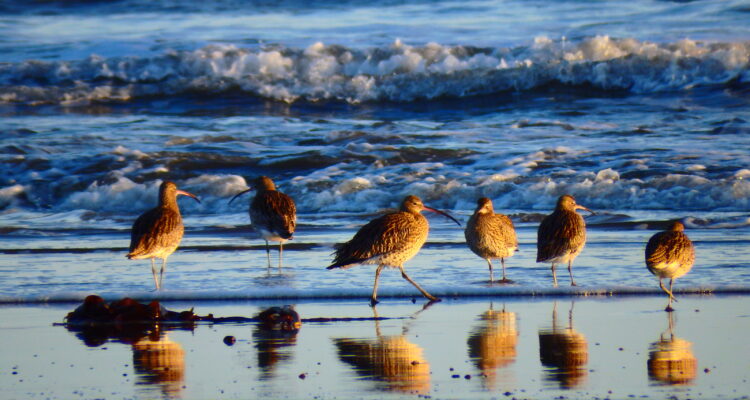
A favourite of your author, the call of the curlew is one of the sounds of both the coast and the Cheviots, where the curlew nest in spring. They are the face of the Northumberland National Park and, with their long-curved beaks, a striking bird to see – watch for them overhead or on the shoreline feeding.
Hares
The wide-open spaces of the county allow great views of hares going about their daily business. You’ll see them in the fields boxing in Spring (this is the females telling the males to back off) and speeding off across the moors if they catch sight of you coming. Bigger than the rabbit, there is something majestic about the hare.
Helpful Guides
The RSPB has a great guide to birds.
Northumberland wildlife is ably represented by Northumberland Wildlife Trusts
Find out more about Chillingham Cattle and Castle here.
Northumberland County Council has a new initiative to help protect both resident and visiting shorebirds – Space for Shorebirds. You can join the expert team for walks along the coast where they’ll tell you all about the birds and their work to protect them.
Billy Shiel’s boat trips take you over to the Farne Islands and Puffin Cruises to the Coquet Islands.
Red squirrels can be seen, if you’re lucky, at the Hauxley Nature Reserve along with lots of other birds and animals.

